
Cat Peeing Outside the Litter Box? Here's What That Puddle Is Trying to Tell You
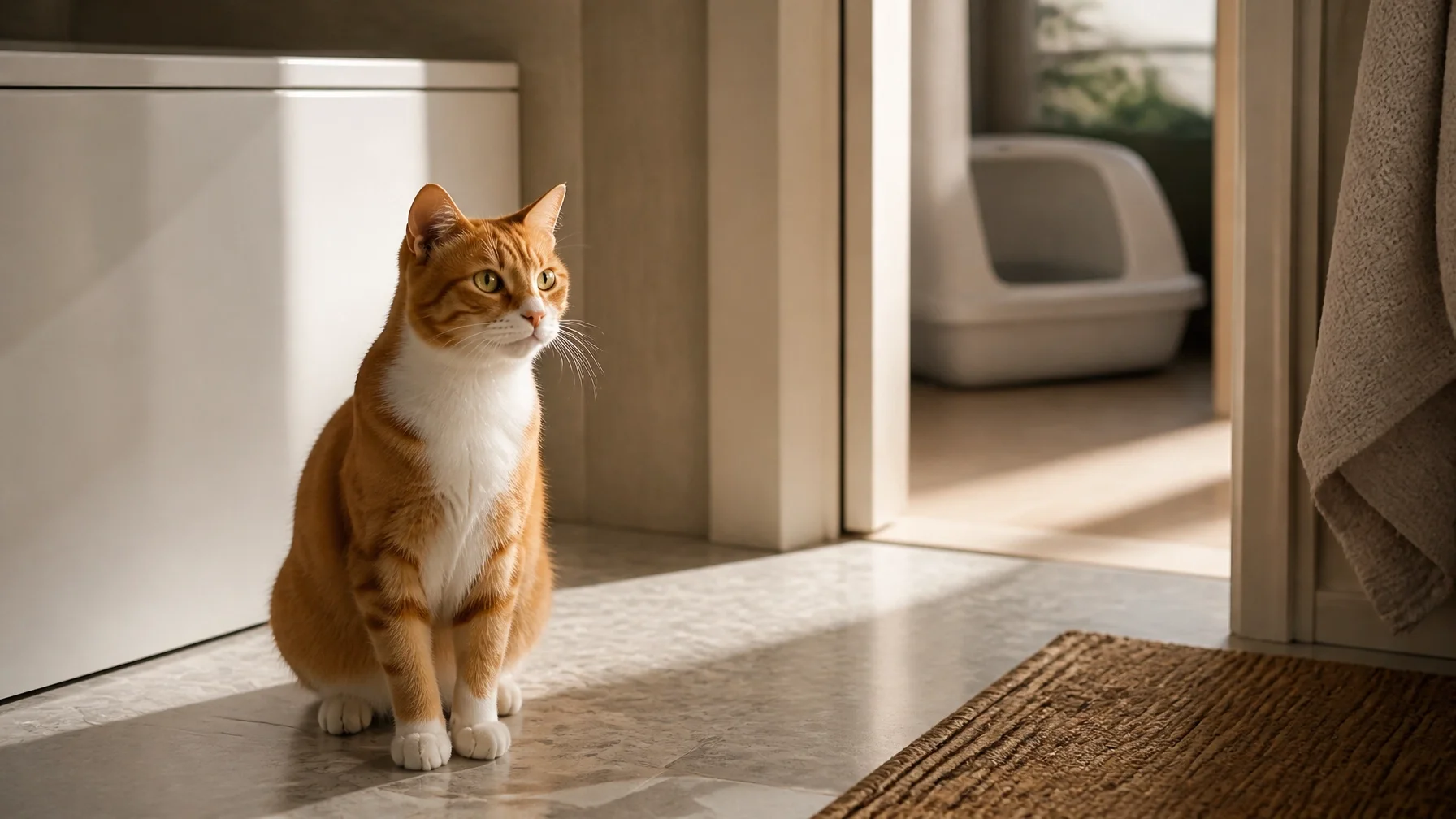
You find the puddle beside the bath, on the rug, or, most offensively, according to your laundry basket, right on your favourite jumper.
Your first thought might be: Why is my cat doing this to me?
Here is the more helpful question:
> What is my cat trying to communicate through urinating outside the litter box?
You are already doing something important by noticing the change. This is common, it is not your fault, and it is often fixable with the right investigation. Cats are not being spiteful, lazy, or “bad.” They are responding to a physical, emotional, or environmental problem in the only ways available to them.
Let’s investigate this puddle from the cat’s perspective.
First: a veterinary check comes before behaviour modification
Any new or ongoing pattern of urinating outside the litter box deserves a veterinary assessment. Medical conditions can make urination painful, urgent, frequent, or difficult to control. Cats may not look obviously sick while they are unwell.
Possible contributors include:
Bladder inflammation, including feline idiopathic cystitis
Urinary crystals or stones
Urinary tract disease
Kidney disease, diabetes, or hyperthyroidism
Arthritis or other mobility problems
Conditions that increase urine volume or urgency
Pain can often cause a cat to associate the litter box with discomfort. They may then avoid it, even after the original medical problem has improved. Please seek urgent veterinary care if your cat is:
Straining but producing little or no urine
Crying or showing distress while trying to urinate
Visiting the litter box repeatedly
Licking their genital area excessively
Vomiting, lethargic, or showing signs of abdominal pain
A urinary obstruction can become life-threatening, particularly in male cats. Behaviour support works alongside veterinary care; it does not compete with it.
The escalation path: small problem to household crisis
Urinating outside the litter box can begin as one isolated puddle. Perhaps the litter changed, the box became painful to use, or another cat started blocking the hallway.
Then the pattern can escalate:
Small problem → ignored or misunderstood → repeated urination → stronger site preference → household stress → crisis
That crisis might involve damaged furniture, mounting cleaning costs, exhausted owners, strained relationships, or conversations about rehoming.
This is not a reason to panic. It is a reason to act early. The sooner we investigate, the more information we have: and the less chance the behaviour has to become a well-established habit.
The PAWS investigation
The PAWS Approach looks at behaviour through four connected lenses: Predictability, Agency, Welfare, and Security.
P: Predictability : does the bathroom experience make sense to your cat?
Cats are creatures of pattern. They notice the location of resources, changes in smell, who walks past, when food appears, and whether another animal is lurking nearby.
From your cat’s point of view, a litter box needs to be:
Easy to find
Easy to enter and leave
Clean enough to feel acceptable
Located somewhere calm
Filled with a tolerable substrate
Available without another cat blocking access
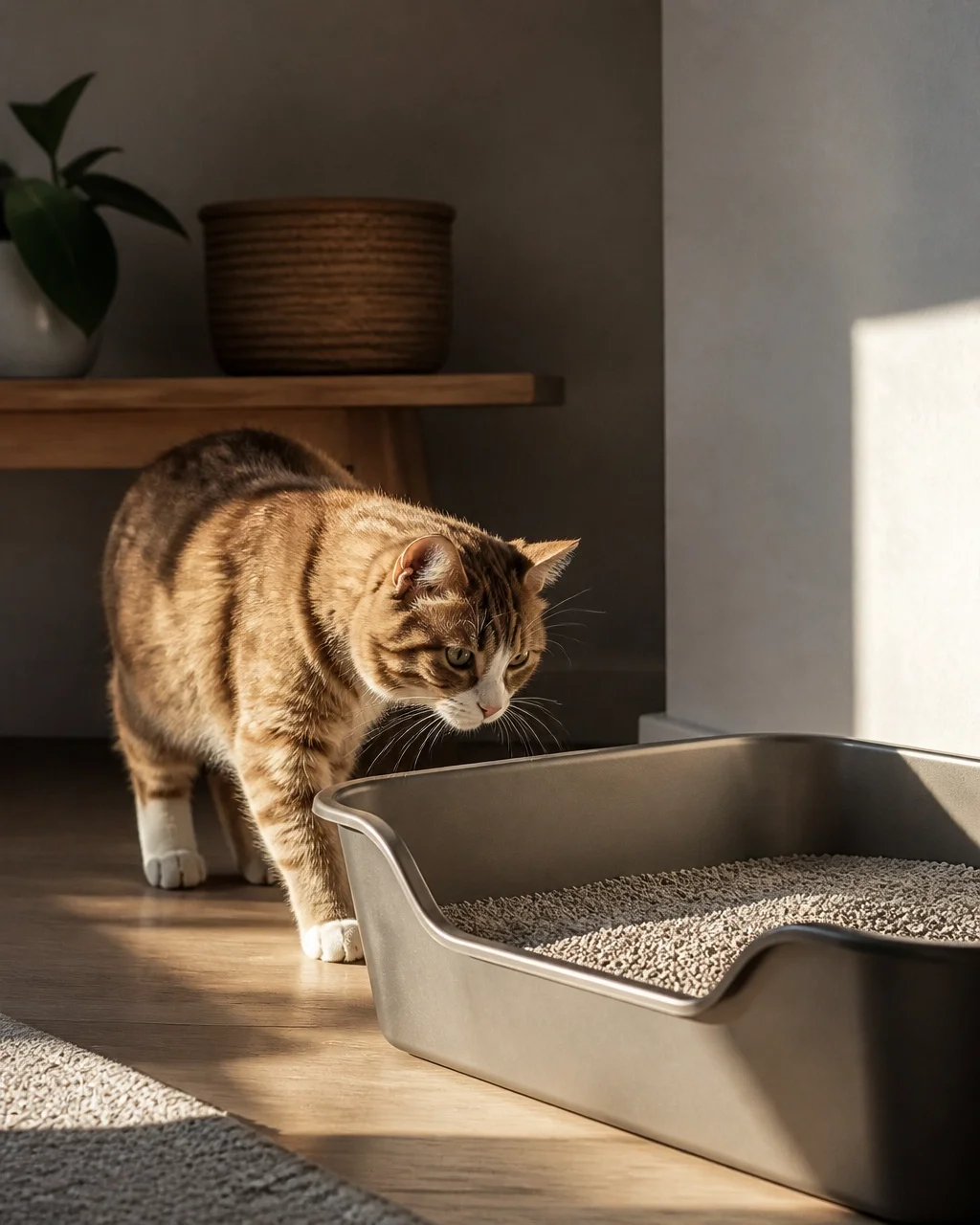
A large, open box with unscented, fine-textured litter is a useful starting point for many cats. We emphasise choice, separated resources, and accessible toileting areas.
You might consider checking:
Is the box large enough for your cat to turn around comfortably?
Is it covered, unstable, high-sided, or difficult to access?
Is it beside a washing machine, in a busy hallway, or near a door?
Could another pet ambush your cat on the way in or out?
Has the litter brand, texture, fragrance, or depth changed?
Are there enough boxes, spread across the home rather than lined up together?
The familiar “one box per cat, plus one” suggestion is a useful starting point. In multi-cat homes, distribution matters too. Three boxes in one laundry room may function like one resource if a confident cat controls the doorway.
A: Agency : can your cat choose where and when to toilet?
Agency means having safe options and some control over what happens next.
A cat who feels trapped near a litter box may avoid it even if the box itself is clean. Covered boxes, narrow corners, crowded rooms, or a single exit can make toileting feel risky. A cat should be able to approach, use the box, and leave without being watched, chased, handled, or interrupted.
We can support agency by:
Offering more than one box location
Providing a clear route in and out
Avoiding forced placement in the box
Allowing the cat to investigate new litter at their own pace
Introducing changes gradually
Using food or play nearby only if the cat remains relaxed and chooses to participate
If your cat prefers the bathtub, a soft rug, or one particular corner, that preference is valuable evidence: not a personal insult. A temporary box near the preferred location may help restore successful toileting. Once use is reliable, we can move it gradually, a small distance at a time.
W: Welfare : is pain, stress, or unmet need part of the picture?
Welfare is more than the absence of disease. It is the whole picture of how a cat feels in their body and their environment: comfort, emotional safety, appropriate stimulation, rest, and the freedom to perform normal cat behaviours.
This is the lens that asks what is going on inside this cat, because stress can express itself through the bladder. This is not a cat being dramatic. It is a physical response to emotional strain, and it is one reason a veterinary work-up comes first: only once medical contributors are managed can we turn our attention to the emotional environment.
Stress can also change toileting more directly. Household changes, conflict with another cat, unfamiliar visitors, renovations, outdoor cats at the window, and unpredictable routines can all leave a cat feeling unsafe, and an unsettled cat may avoid the very places where they feel most exposed, including the litter box.
When we investigate welfare, we are looking for the whole picture:
Changes in appetite, drinking, sleep, or energy
Hiding, withdrawal, or reduced interaction
Tension with another cat in the home
New or persistent stressors in the environment
Signs of pain or discomfort, including mobility changes
Reduced opportunity for normal behaviours, including play
S: Security : what does the location tell us?
Location and substrate are clues .
A bathtub may be quiet, cool, easy to access, and free from competing scents. For a stress-prone cat, it may become a predictable “safe bathroom.” In that context, urinating there may be an attempt to find a tolerable place: not revenge.
Soft surfaces may suggest a substrate preference. They may also carry familiar scents and feel emotionally significant when a cat is unsettled. This does not mean your cat is trying to send a dramatic message about your relationship. It means we should investigate comfort, scent, stress, and litter preferences together.
These locations may point towards territorial uncertainty, particularly if outdoor cats, new animals, visitors, or household changes are involved. Look for other signs of tension, such as hiding, vigilance, reduced appetite, conflict, or changes in sleep.
Something to keep in mind is these clues are are starting points. Location and substrate tell us where to begin looking and we can never say for certain what a cat is experiencing without the fuller picture: their medical history, daily routines, relationships with other animals, and a detailed look at the environment from the cat's perspective. The more pieces we gather, the clearer the story becomes, and the better placed we are to help, rather than assume.
The Case of the Bathtub Bather
Consider “Biscuit,” a fictional stress-prone cat who begins urinating in the bathtub whenever the household routine changes.
Biscuit’s people are exhausted and worried. They have cleaned repeatedly, restricted bathroom access, and wondered whether they are failing him. They are not. They have been trying hard with the information they have.
The veterinary examination comes first. Biscuit’s tests do not identify a current urinary disease, so the investigation expands.
We discover:
His litter box is in a busy laundry area
The washing machine sometimes starts while he is nearby
A second cat regularly passes the only exit
His daily routine has become unpredictable
He has few safe resting places and little interactive play
The bathtub is not random. It is quiet, familiar, easy to access, and free from feline traffic. It has become Biscuit’s most predictable option. The smooth surface may also be soothing, reducing any splash-back to Biscuit’s fur.
A cat-centric plan might include:
Adding a large, open box near the bathroom temporarily
Offering another box in a quieter location
Separating resources and improving escape routes
Creating elevated resting spaces and secure retreats
Building gentle, predictable play opportunities
Cleaning soiled areas with an enzymatic product
Monitoring Biscuit’s body language and adjusting the plan around his consent
No scolding. No rubbing his nose in the puddle. No frightening interruptions. Punishment can increase fear and may worsen the problem.
What to do today
You might begin with these low-pressure steps:
Book a veterinary check, especially if the change is sudden, frequent, or accompanied by discomfort.
Record the pattern: location, surface, time, amount, posture, and what happened beforehand.
Check the box setup: size, cleanliness, litter, access, and escape routes.
Avoid punishment and prevent access to heavily soiled areas where practical.
Offer choice: additional boxes, quiet locations, and safe retreat spaces.
Notice the whole cat: appetite, drinking, play, sleep, hiding, social tension, and body language.
You are not a bad owner because this is happening. In fact, asking for help is something attentive, loving owners do: especially when they are tired, worried about their bond, and determined to keep their cat safe at home.
If the veterinary picture is being managed and the puddles continue, The PAWS Approach can help. We provide one-on-one consultations in the Canberra area and online further afield, with a detailed assessment of your cat’s environment, routines, and body language, followed by a tailored written behaviour modification plan. We can also liaise directly with your vet where needed.
Our free discovery call is a no-obligation opportunity to describe what is happening and work out whether behaviour support is the right next step. No pressure. Just a conversation: and perhaps the beginning of a much clearer case file.
References
Carney, H. C., Sadek, T. P., Curtis, T. M., Halls, V., Heath, S., Hutchison, P., Mundschenk, K., & Westropp, J. L. (2014). AAFP and ISFM guidelines for diagnosing and solving house-soiling behavior in cats. Journal of Feline Medicine and Surgery, 16(7), 579–598. https://doi.org/10.1177/1098612X14539092
Ellis, S. L. H., Rodan, I., Carney, H. C., Heath, S., Rochlitz, I., Shearburn, L. D., Sundahl, E., & Westropp, J. L. (2013). AAFP and ISFM feline environmental needs guidelines. Journal of Feline Medicine and Surgery, 15(3), 219–230. https://doi.org/10.1177/1098612X13477537
Grigg, E. K., Pick, L., & Nibblett, B. (2013). Litter box preference in domestic cats: Covered versus uncovered. Journal of Feline Medicine and Surgery, 15(4), 280–284. https://doi.org/10.1177/1098612X12465606