
Why Does My Cat Bite Me When I Pat Them? Understanding Petting-Induced Aggression
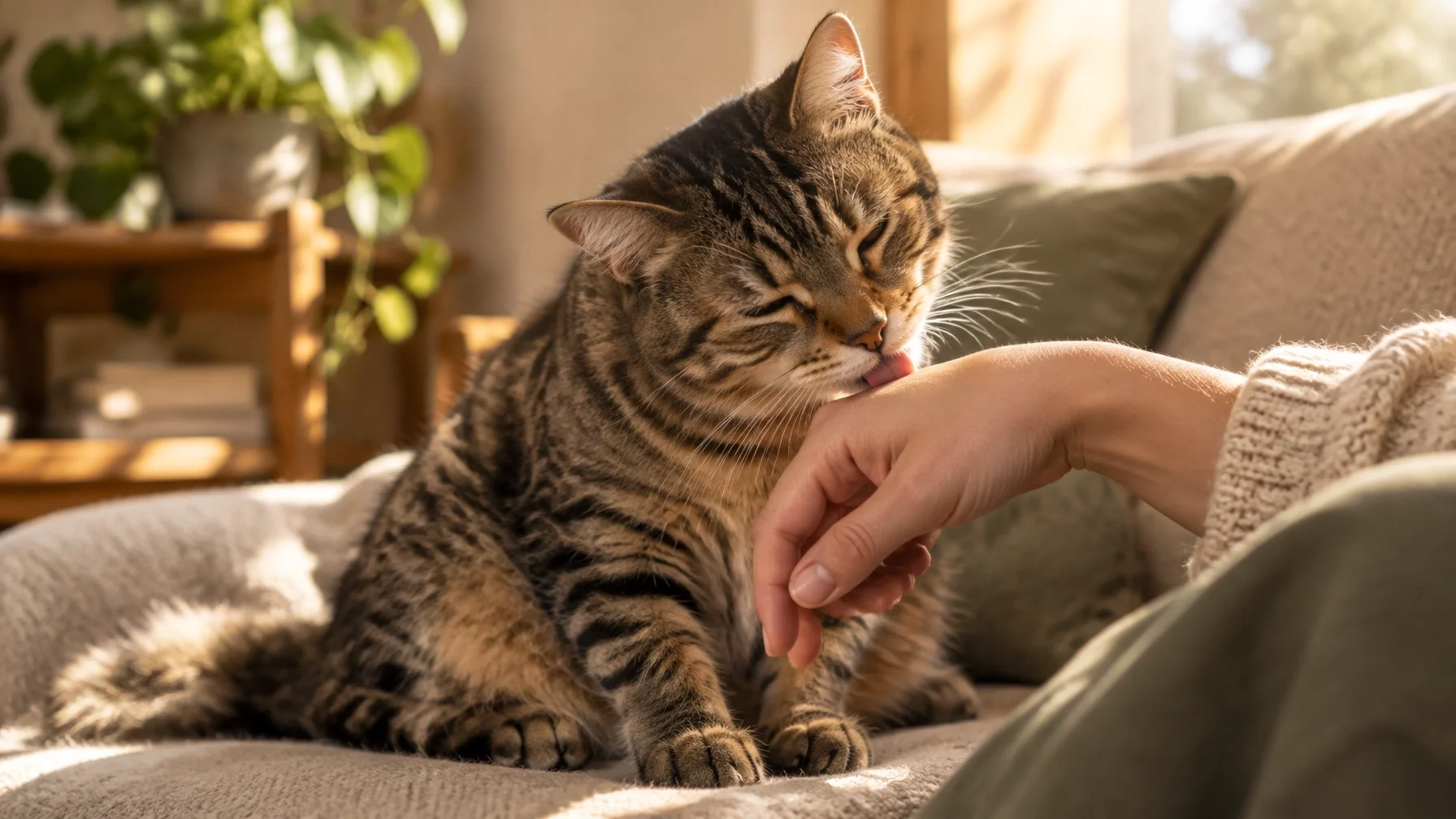
You're already doing so much right by noticing what happens when you pat your cat and looking for an explanation. If you’ve searched “why does my cat bite me when I pet them?” or “cat bites then licks me,” we understand how confusing that little plot twist can feel.
Petting-related biting is common. It doesn’t mean your cat is mean or spoiled, or that you’re a bad owner. Often, it’s a communication problem: your cat’s signals and your hands have got out of sync. With the right support, it can improve.
What is petting-induced aggression?
Petting-induced aggression, also called petting-related aggression, describes biting or swiping during, or shortly after, petting. Some cats actively seek company, enjoy a few strokes, then abruptly turn and bite. Others may initially tolerate touch but become uncomfortable as it continues.
That sudden switch can feel unpredictable, but it often isn’t unprovoked. In their review of feline owner-directed aggression, Amat and Manteca (2019) describe petting-related aggression as common and note that cats may show subtle changes in body language before biting.
A cat that bites and then licks you may be showing more than one behaviour in quick succession. The lick could be grooming or another social gesture, but it doesn’t prove the cat wanted the petting to continue, or that the bite was affectionate. Look at the whole interaction: what happened beforehand, where you touched, and how your cat’s body changed.
Why might my cat bite when I pet them?
We can think of the bite as information: something about the interaction has become too much, uncomfortable, or difficult to control. Possible reasons include:
A low tolerance for touch. Each cat has an individual threshold. Repeated strokes can become uncomfortable before we realise the mood has shifted.
A request for control. Your cat may want to be near you without wanting ongoing touch. Choosing proximity is not the same as agreeing to unlimited pats.
Sensitive areas. Some cats prefer gentle contact around the head and cheeks and dislike being touched elsewhere. Preferences vary between individuals.
Pain or illness. Dental disease, arthritis, skin problems and other conditions can make handling painful. A cat may also react to touch because of a sensory issue; skin rippling or sudden sensitivity needs veterinary investigation, not an at-home diagnosis.
Redirected arousal. A startling noise, an unfamiliar cat outside or another stressful event may leave a cat on edge. Touch may then be the final straw, even if it wasn’t the original trigger.
A small study of three cats found that biting during petting could function to end the interaction. The researchers reduced the behaviour through gradual, careful behaviour modification, not by pushing the cats to tolerate more contact (Fritz et al., 2022). That small study offers one useful explanation, not a universal answer for every cat.
The warning signs we can learn to spot
A cat doesn’t need to growl or hiss to say “I’m done.” Before a bite, watch for changes such as:
Tail-tip flicking or a faster swish
Skin rippling along the back
Ears turning sideways or backwards
Body tension, a pause in movement or sudden stillness
Turning the head towards your hand, shifting away or looking more alert
These are starting points for investigation, not definitive diagnoses. Some signals are subtle, and a single sign doesn’t tell us exactly what your cat is feeling. Notice what changes for your cat, and stop touching at the first sign of discomfort rather than waiting for a bite.

The escalation path, and why early support helps
A small problem can become harder to manage if the early signals are missed or punished:
Mild warnings are missed or punished → biting escalates → handling becomes a struggle → vet visits, children or guests may be bitten → household trust erodes.
That progression is not inevitable. It’s a reason to act early, not to panic. If the pattern continues without support, stress and safety concerns can grow, sometimes contributing to vet-bill crises or the painful prospect of rehoming. Helping your cat sooner is a thoughtful way to protect both your bond and their welfare.
What to do: make touch predictable and optional
Our PAWS lenses help us look at the interaction from your cat’s perspective:
Predictability: Keep interactions calm and easy to anticipate. Let your cat approach; avoid surprise pats.
Agency: Offer touch rather than assuming it’s welcome. Your cat should be able to move away.
Welfare: Pay attention to comfort, health and emotional state. Stop before your cat has to escalate.
Security: Make sure your cat has safe space and isn’t cornered or held in place.
Try this gentle, cat-centred approach:
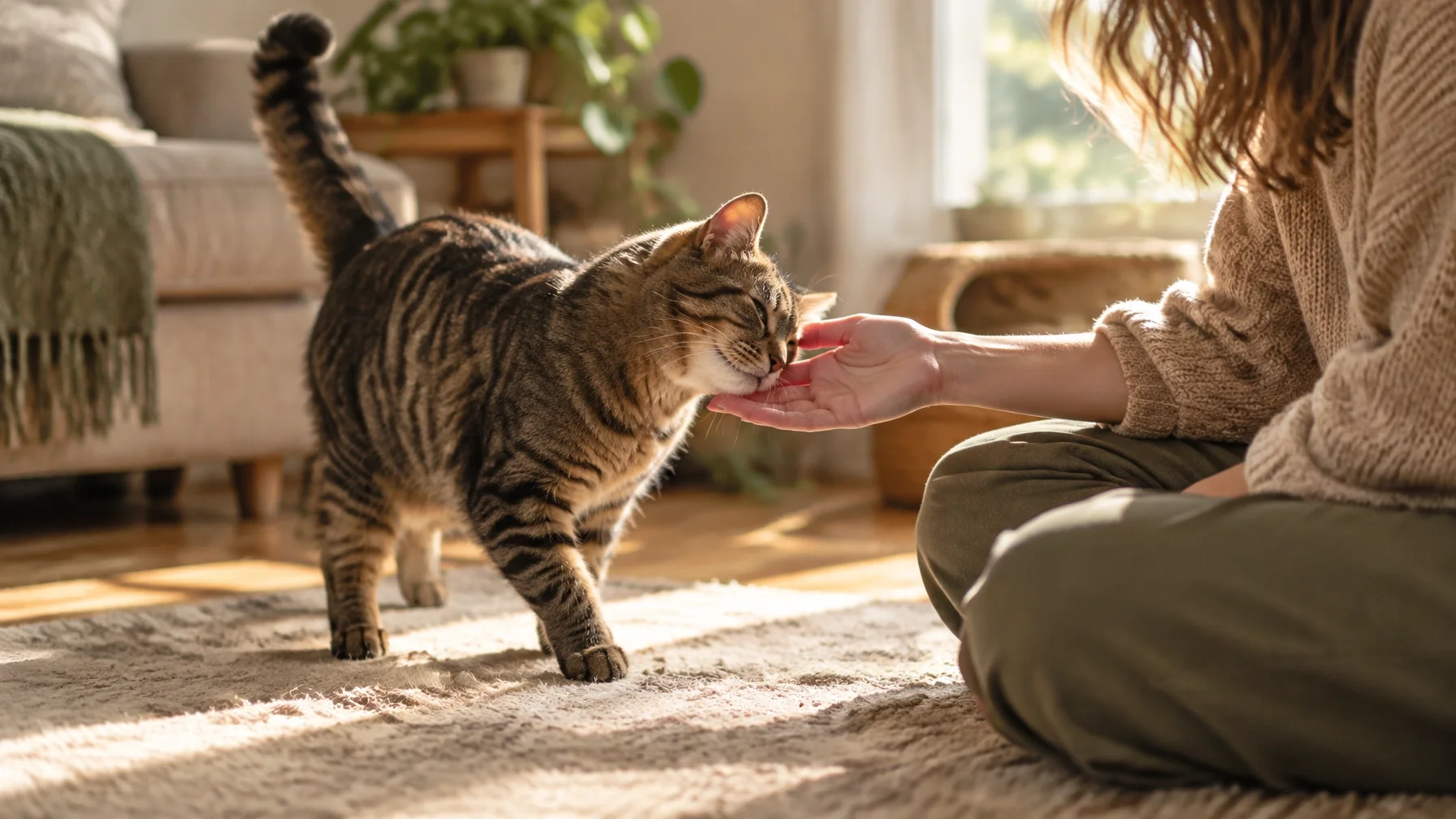
Let your cat initiate. Sit nearby and offer a still hand at a comfortable distance. Let your cat choose whether to approach, sniff or rub against it. No approach means no touch for now.
Start with three strokes. If your cat solicits contact, offer up to three gentle strokes in a preferred area, such as the cheek or head, then pause. This “3-then-freestyle” approach means your cat decides whether to invite more. If they lean in or reinitiate, continue briefly and pause again. If they move away, go still, turn their head or show another warning sign, stop.
Keep the exit open. Don’t hold your cat in place, follow them with your hand or reach over them to restart. Leaving is a valid answer.
Never punish a bite or warning. Shouting, spraying, tapping or forcing more contact can make the interaction feel less safe. A bite is information; we want to understand it, not suppress the message.
Keep a simple pattern log. Note the body area touched, approximate number of strokes, setting, what happened just beforehand and any changes in body language. This can help your vet or behaviour professional spot useful patterns.
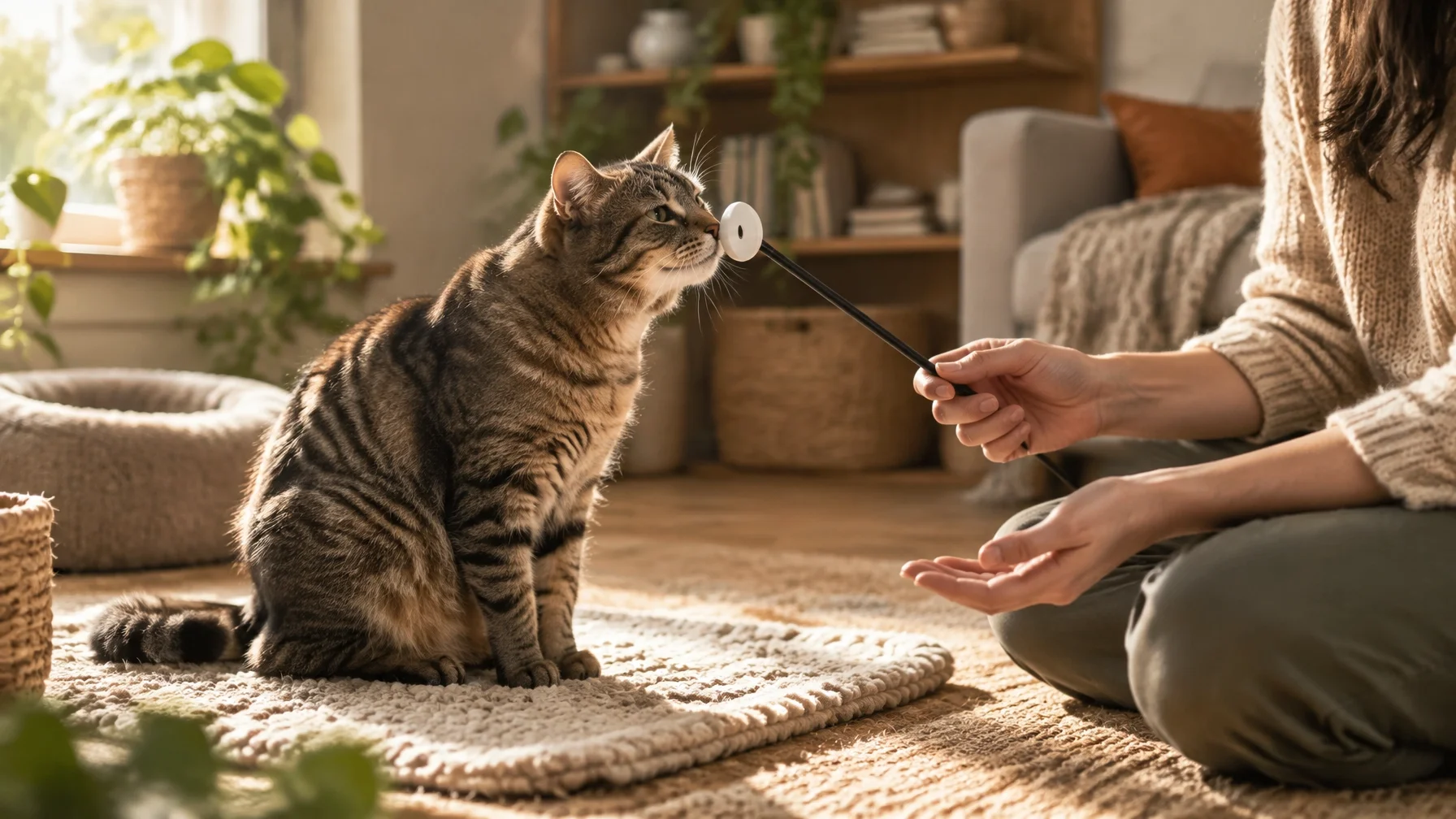
Cooperative-care exercises, such as teaching a cat to choose a chin rest or touch a target, can build confidence around handling. They should be gradual, reward-based and optional: the cat can pause or leave, and the exercise stops when they do. If your cat is already biting, ask your vet or a qualified behaviour professional how to begin safely rather than practising through discomfort.
First, book a veterinary check if this is new or changing
If your cat has suddenly become irritable when handled, reacts to a particular body area, or shows changes in mobility, grooming, appetite or general behaviour, please contact your vet first. Dental pain, arthritis, skin disease and other medical contributors can affect how a cat responds to touch. Merola and Mills’ review of behavioural pain assessment in cats underlines why behavioural changes deserve careful assessment rather than guesswork.
The PAWS Approach is complementary to veterinary care, never a replacement for it. With your permission, we can liaise directly with your vet so health and behaviour information inform the same plan.
Once medical contributors have been considered, we can help you understand the pattern and create a practical, tailored approach. Our one-on-one consultations are available in Canberra and Queanbeyan, and online further afield. A free discovery call is a low-pressure chance to describe what’s happening, with no commitment: book your discovery call.
Please seek help promptly if the biting is escalating, punctures skin, involves children or guests, or makes essential handling difficult. This article is general information, not a diagnosis. Body-language signals are starting points for investigation; veterinary work-ups and individual behaviour assessments are needed to understand what’s driving a particular cat’s response.
Want gentle, cat-centred ideas and support in your inbox? Visit The PAWS Approach.
References
Amat, M., & Manteca, X. (2019). Common feline problem behaviours: Owner-directed aggression. Journal of Feline Medicine and Surgery, 21(3), 245–255. https://doi.org/10.1177/1098612X19831206
Ellis, S. L. H., Rodan, I., Carney, H. C., Heath, S., Rochlitz, I., Shearburn, L. D., Sundahl, E., & Westropp, J. L. (2013). AAFP and ISFM feline environmental needs guidelines. Journal of Feline Medicine and Surgery, 15(3), 219–230. https://doi.org/10.1177/1098612X13477537
Fritz, J. N., Fletcher, V. L., Dyer, S. P., Carpenter, K. A., Skrbec, M. L., & Yankelevitz, R. L. (2022). Functional analysis and treatment of aggression exhibited by cats toward humans during petting. Journal of Applied Behavior Analysis, 55(1), 169–179. https://doi.org/10.1002/jaba.877
Merola, I., & Mills, D. S. (2016). Systematic review of the behavioural assessment of pain in cats. Journal of Feline Medicine and Surgery, 18(2), 60–76. https://doi.org/10.1177/1098612X15578725