
You’re already doing something important by asking whether your cat’s indoor life is meeting their needs. It’s a thoughtful question, not a sign you’ve got it wrong.
If you’re wondering, “Is my indoor cat bored or depressed?” or “Does my cat need more stimulation?”, the answer may not be another toy. It may be a closer look at what your cat can actually do in their home, and how safe, interested and in control they seem while doing it.
Many indoor cats in Australia have gaps in their environmental needs. That’s not because their people don’t care; often, nobody has shown them what “enough” enrichment looks like. One Australian study found that the needs of many pet cats were not being met, despite guardians’ good intentions (Lawson et al., 2020).
And enrichment isn’t just a collection of toys. It’s whether everyday life gives your cat suitable opportunities to rest, explore, scratch, forage, play, retreat and make choices.
Enrichment is more than a sign your cat is bored
Our earlier guide, “Is My Cat Bored? Signs of Under-Stimulation”, focuses on possible clues that a cat may need more stimulation. Here, we’re looking at the home itself: how to assess what’s available and whether it works for your cat.
That distinction matters because a quiet cat isn’t automatically content, and an energetic cat isn’t automatically under-enriched. A cat’s behaviour is a starting point for investigation, not a neat label. Changes such as over-grooming, altered toileting, weight gain or withdrawal can have several causes, including medical ones.
Enrichment gaps can build gradually: a small mismatch between what a cat needs and what’s available goes unnoticed; stress or frustration may accumulate; behaviour concerns may become more established; and eventually the household can find itself facing a crisis, extra vet visits or worries about whether the cat can stay at home. This isn’t a prediction or a reason to panic. It’s a reminder that early, supportive adjustments can be easier than waiting until everyone is exhausted.
The AAFP and ISFM environmental needs guidelines describe a healthy feline environment as one that supports safety, access to resources, play and predatory behaviour, positive human interaction and a cat’s sensory needs. We can use those ideas alongside the PAWS lenses (Predictability, Agency, Welfare and Security) to investigate whether home life is working from the cat’s point of view.
A practical indoor-cat enrichment check
Rather than counting toys, walk through these questions. There is no perfect score: each cat, household and stage of life is different.
Predictability: can your cat recognise the rhythm of the day?
Are meals, play or other pleasant interactions reasonably predictable?
Does your cat have familiar places to rest and use essential resources?
Can they anticipate household activity, or do loud sounds and sudden interruptions often catch them off guard?
A routine doesn’t need to run like a railway timetable. Familiar patterns can simply make the day easier to read.
Agency: does your cat have meaningful choices?
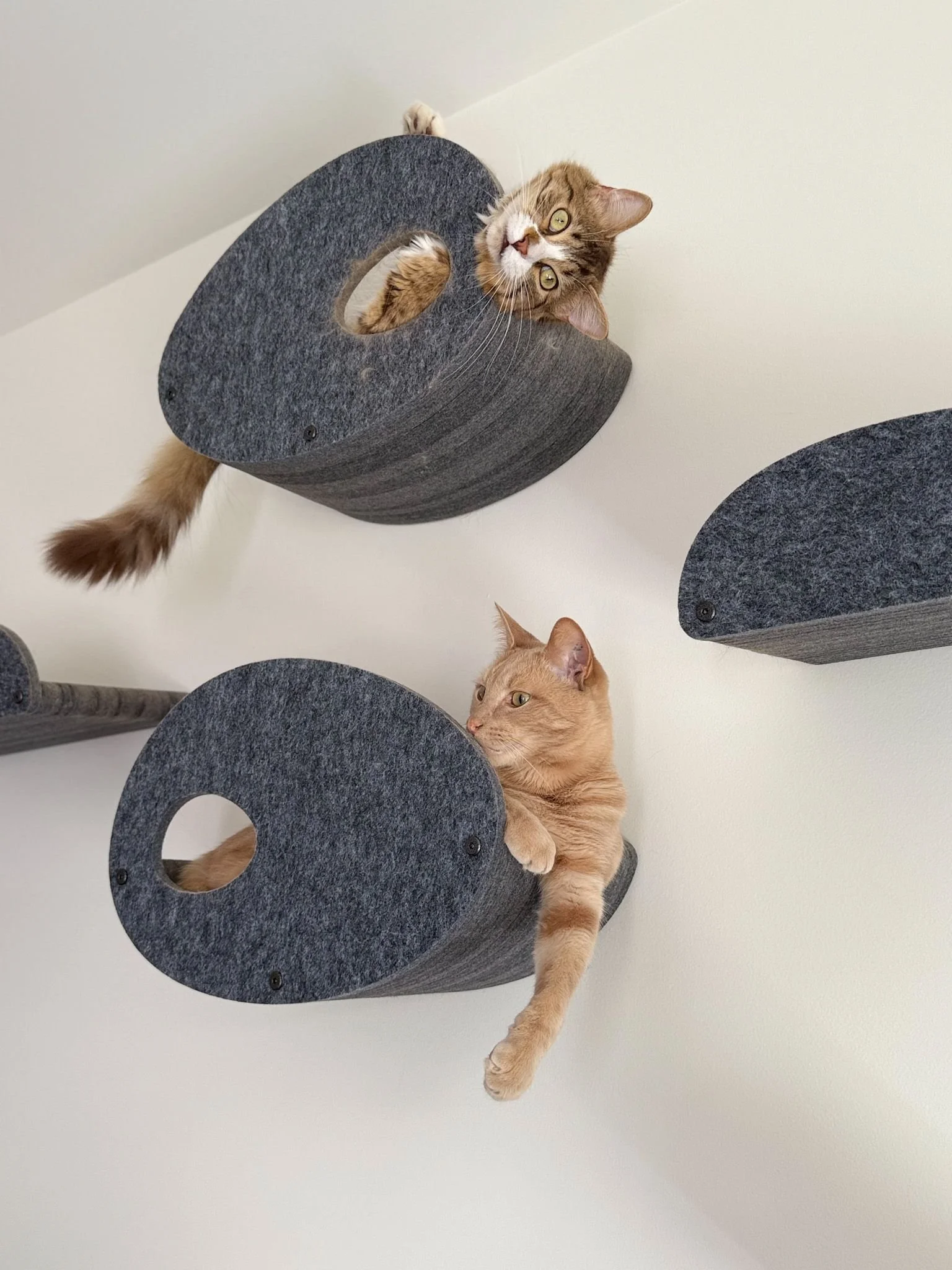
Can they choose between different resting spots, including elevated and covered options?
Can they approach or leave social contact without being followed or picked up?
Can they decide whether to investigate a new object or take part in play?
Enrichment is an invitation, not an assignment. A cat who walks away has given us useful information.
Welfare: are there good outlets for everyday cat behaviour?
Is there somewhere sturdy and suitable to scratch, ideally where your cat already likes to spend time?
Can your cat search for some of their food, if that suits their diet and health?
Do they have safe opportunities to stalk, chase and pounce during interactive play?
Can they watch the world from a comfortable, secure window spot?
The predatory play sequence (stalk, chase, pounce and catch) is a useful guide when choosing how to play. Try a toy that moves like prey, give your cat room to opt in and allow them to catch it. For cats who are unsure, start with a gentle movement or short session; there’s no need to stage an action-movie finale. The AAFP/ISFM guidelines recommend opportunities for predatory-type behaviour, including play and food-seeking activities (Ellis et al., 2013).
Food puzzles can be introduced gradually, starting with an easy option. Keep your cat’s nutrition and ability to access enough food in mind, and check with your vet if you have questions about diet or weight.
Security: can your cat rest and access resources without pressure?
Is there a quiet retreat where they can be left undisturbed?
Are food, water, litter trays, scratching spots and resting areas sensibly arranged?
In a multi-cat home, can each cat access key resources without being blocked or watched by another?
Are familiar scents preserved when you clean or introduce something new?
An elevated perch can offer a different view; a covered bed or box can offer a place to hide. Both may be useful choices. In a multi-cat home, simply having resources in the house isn’t enough if one cat can guard the route to them.
Make changes your cat can actually use
A new cat tree is only enrichment if your cat can access it and feels comfortable using it. Likewise, a puzzle feeder that is too difficult may be more baffling than fun.
Choose one or two manageable changes, then observe:
Does your cat use the new option voluntarily?
Can they leave it easily?
Do they seem relaxed while exploring, eating or resting?
Does the change make access easier for every cat in the household?
Try placing a new resource near a familiar one rather than removing the old option immediately. Keep play and feeding adjustments comfortable for your cat, and put away toys with strings or small parts when you’re not supervising. If the first attempt gets no feline applause, that’s information, not proof you’ve failed. A different location, texture, height or pace may suit them better.
A survey of indoor-cat guardians found an association between reported play sessions of at least five minutes and fewer reported behaviour problems (Strickler & Shull, 2014). Think of play duration as something to tailor, not a benchmark your household has to hit.
If you’re in Canberra, The PAWS Approach offers in-person consultations; online support is available further afield. We start with a free, low-pressure discovery call to hear what’s happening, no commitment required. If a consultation would help, it includes a detailed assessment of your cat’s environment and body language and a tailored written plan. We can also liaise with your vet where needed.
Book a free discovery call and tell us what you’re noticing. You don’t have to solve the whole home in one afternoon.
Want occasional cat-welfare notes and updates? You can sign up for news and updates on The PAWS Approach homepage.
References
Ellis, S. L. H., Rodan, I., Carney, H. C., Heath, S., Rochlitz, I., Shearburn, L. D., Sundahl, E., & Westropp, J. L. (2013). AAFP and ISFM feline environmental needs guidelines. Journal of Feline Medicine and Surgery, 15(3), 219–230. https://doi.org/10.1177/1098612X13477537
Lawson, G. T., Langford, F. M., & Harvey, A. M. (2020). The environmental needs of many Australian pet cats are not being met. Journal of Feline Medicine and Surgery, 22(10), 898–906. https://doi.org/10.1177/1098612X19890189
Strickler, B. L., & Shull, E. A. (2014). An owner survey of toys, activities, and behavior problems in indoor cats. Journal of Veterinary Behavior, 9(5), 207–214. https://doi.org/10.1016/j.jveb.2014.06.005